
Report: Muhammad Yousuf
What is Eid?
The word “Eid” comes from the Arabic root ‘Awd’, meaning “to return repeatedly.” In Islamic Shariah, Eid is a day that brings Allah’s mercy, gratitude, and joy to the Muslim community.

The Prophet Muhammad (ﷺ) said:
“Allah has appointed two days for you—Eid-ul-Fitr and Eid-ul-Adha.”
(Sunan Abu Dawood, Hadith 1134)
Therefore, in Shariah, there are only two prescribed Eids—Fitr and Adha.
What does Eid mean in Islam?
In Islam, Eid is not only about celebration but also about:
Worship of Allah
Increasing Taqwa (God-consciousness)
Strengthening Muslim unity
Promoting social harmony
Eid is a worship-centered festival, not an entertainment-centered one.
What is Milad-un-Nabi?
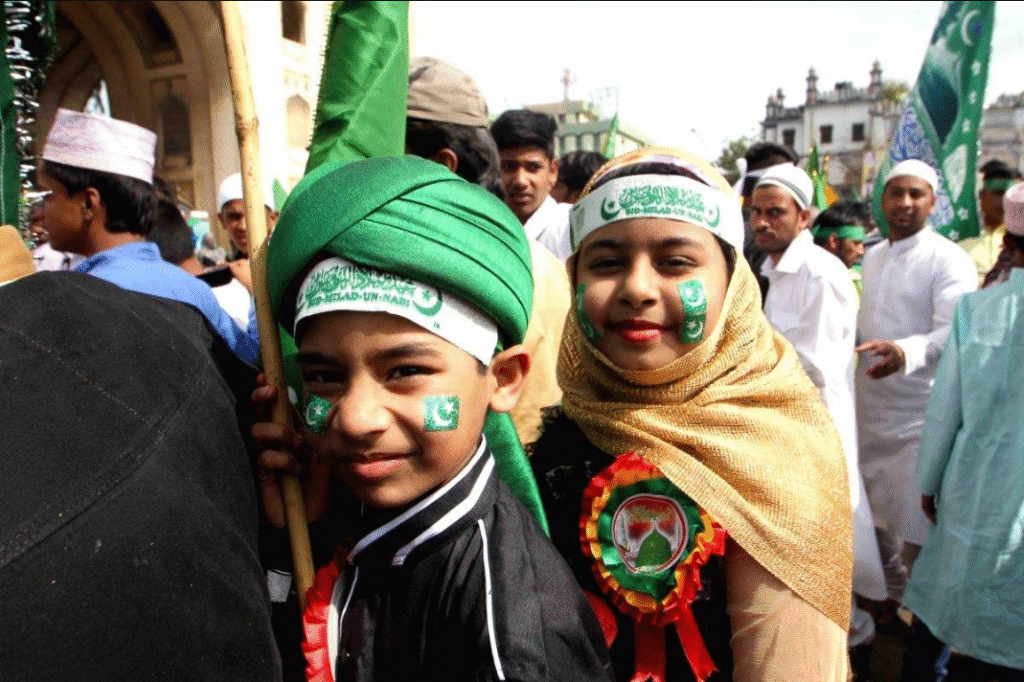
“Milad” means birth, and Milad-un-Nabi refers to the commemoration of the birth of the Prophet Muhammad (ﷺ). In many Muslim countries, it is popularly known as Eid-e-Milad-un-Nabi.
Day of the Prophet’s Birth
According to authentic Hadith, he was born on a Monday.
The Prophet (ﷺ) said:
“This is the day I was born, and this is the day I received revelation.”
(Sahih Muslim, Hadith 1162)
Date of Birth (with differences of opinion)
Historical sources vary regarding the exact date:
Most widely accepted: 12th Rabi’ al-Awwal
Others: 8th, 9th, 10th, or 17th Rabi’ al-Awwal
There is consensus on Monday being the day of the week.
(Ibn Ishaq, Ibn Hisham, Tarikh al-Tabari)
When did Eid-e-Milad-un-Nabi start?
During the era of the Sahabah and Tabi‘un, there was no separate celebration of Milad.
Historical records indicate that formal Milad gatherings began in the 6th century Hijri under the Fatimid rulers of Egypt and later spread to Syria, Iraq, and the Indian subcontinent.
Milad-un-Nabi: Bid‘ah and Proper Form
Hanafi scholars and many other Ulama state:
Discussing the Prophet’s life (Seerah), reciting Durood, and offering Duas are permissible.
Celebrations involving processions, music, fireworks, extravagance, and disorder are Bid‘ah (innovations) and impermissible.
Imam Jahabi (RA) said:
“Remembering the Prophet’s birth is undoubtedly a good deed; however, one must avoid innovations and forbidden acts.”
(Siyar A‘lam al-Nubala, 13/136)
Summary
Islam prescribes only two Eids: Eid-ul-Fitr and Eid-ul-Adha.
The Prophet (ﷺ) was born on a Monday, though the exact date is debated.
Eid-e-Milad-un-Nabi did not exist in the early period; it was introduced later for political-cultural reasons.
According to Hanafi fiqh, if the celebration involves Quran recitation, Seerah discussion, and Durood, it is permissible or recommended (Mubah/Mustahab).
Elevating it to the status of an Eid or engaging in Bid‘ah is not permissible.
Conclusion:
Eid-e-Milad-un-Nabi is not a separate Shariah Eid. However, expressing love for the Prophet, remembering his Seerah, and holding worship-centered gatherings are permissible within Shariah limits, while innovations and extravagance should be avoided.